

Automotive Google Android System (AAOS & GAS) High-Frequency Iteration Testing Services

In the evolution of invehicle infotainment (IVI) systems, Android Automotive OS (AAOS), as an opensource solution, has been gaining increasing attention from global automobile manufacturers.
AAOS provides two configuration modes: one that integrates Google Automotive Services (GAS) and another that operates independently of GAS.

OS Selection Workflow for OEMs and Tier 1 Suppliers
Regardless of configuration, AAOS has already been adopted by many mainstream OEMs as the foundational platform for nextgeneration IVI systems.
As a company deeply involved in the testing and certification of various Google ecosystem services, ShenGuang (Deeplight) has assisted automotive chip manufacturers, module platform vendors, and vehicle OEMs in completing numerous Googlerelated certifications.
Based on this experience, Deeplight offers specialized AAOS and GAS testing services tailored for both system configurations.
1. Android Automotive OS (AAOS)
AAOS is an opensource operating system optimized for automotive applications, developed and maintained by Google.
It is a deeply customized version of the Android Open Source Project (AOSP) that runs directly on invehicle hardware, providing a fullfeatured IVI (InVehicle Infotainment) platform.
OEMs can build customized applications on top of AAOS, similar to how smartphone and tablet manufacturers use AOSP for device customization.
Key Points:
①. Opensource – OEMs or Tier 1 suppliers can use AAOS without a license from Google.
②. Highly customizable – OEMs can deeply tailor the AAOS system to their specific requirements.
2. Google Automotive Services (GAS)
GAS is a collection of Google proprietary applications and services layered on top of AAOS.
Unlike GMS (Google Mobile Services), GAS is designed specifically for the automotive environment, taking into account driver distraction guidelines and user experience limitations. For instance, certain applications that could distract the driver are restricted.
GAS applications can interact directly with the vehicle’s systems, supporting the development of vehicleintegrated applications such as HVAC (Heating, Ventilation, and Air Conditioning) control or EVS (Event Vision Sensor) camera systems.
GAS also integrates Google Assistant, enabling handsfree operation.
Obtaining GAS authorization requires direct engagement between the OEM and Google.
Google enforces a set of hardware and software compliance requirements, known in the industry as CDD requirements (Compatibility Definition Document).
After detailed negotiations and approval, Google authorizes the OEM to use GAS—an arrangement that incurs additional licensing and compliance costs.
Key Points:
Proprietary and licensed — not opensource.
Requires direct authorization from Google.
3. Android Auto
Android Auto is a smartphonebased infotainment projection system that connects to the car’s display via USB or WiFi, allowing users to operate mobile applications through the car interface.
Difference between Android Auto and GAS:
Android Auto depends on a connected smartphone and functions primarily as a phonetovehicle projection solution.
GAS, on the other hand, runs natively on the vehicle’s system and integrates Google services such as Google Maps and the Play Store directly into the AAOS platform—no smartphone connection required.

Deeplight’s AAOS/GAS Testing Services for OEMs and Tier 1 Suppliers
(1) OEMs Using Only AAOS (Without GAS)
For OEM products that use the AAOS system without integrating the GAS application suite,
Deeplight provides a dedicated testing environment and toolchain capable of performing CTS (Compatibility Test Suite) and CTSV testing.
As CTS and CTSV represent the most extensive compatibility tests in the Google ecosystem,
Deeplight offers weekly or biweekly highfrequency validation, targeted module testing, and casespecific retry testing services to ensure software and hardware compatibility of AAOSbased IVI systems.
(2) OEMs Using AAOS + GAS
For OEMs that have obtained Google authorization, Deeplight offers Google Automotive xTS testing services, including:
ATS (Automotive Test Suite)
ATSV
STS (Security Test Suite)
CTSonGSI
VTS (Vendor Test Suite)
Services include log collection, failure regression testing, issue categorization and analysis, and debugging support, ensuring compatibility between GAS, AAOS, and vehicle hardware.
GAS Certification Workflow and Timeline
1. The applicant (OEM) signs the GAS agreement with Google, becoming an official GAS partner.
2. The OEM submits a certification application to Google.
3. The OEM obtains the AAOS code, integrates GAS, and begins software and hardware adaptation and debugging.
4. The OEM prepares a test bench for xTS testing and conducts road testing.
5. The GAS certification process typically takes 12 to 18 months.
Deeplight’s Involvement in the Google Ecosystem
Deeplight actively participates in a wide range of Google ecosystem certification programs, including:
GMS Certification
TADA Certification
Widevine Certification
GAS Certification
Android Auto Certification
The company maintains a dedicated testing network environment, comprehensive testing tools, and experienced engineering teams.
To date, Deeplight has successfully completed numerous certifications for chip vendors, module suppliers, OEMs, and finished product manufacturers within the Google ecosystem.
In addition, Deeplight offers outsourced Google testing services — and welcomes all inquiries and cooperation opportunities.
-
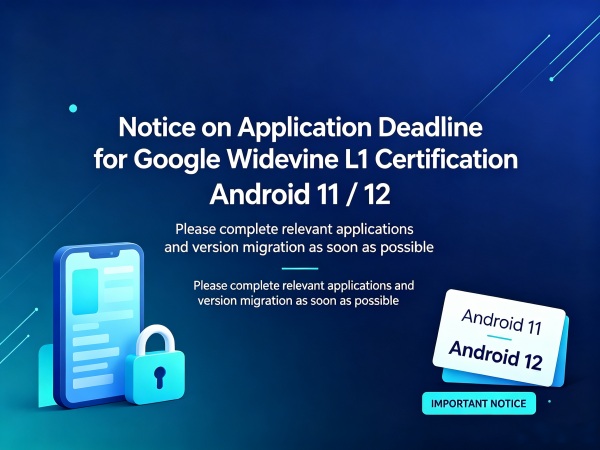
Notification on the Deadline for Google Widevine L1 DRM Certification Applications for Android 11 and 12
Due to Google Widevine‘s latest security and policy upgrades — aimed at ensuring the security and compliance of the digital rights management (DRM) ecosystem — Google has now officially terminated the acceptance of new Widevine L1 DRM certification applications for Android 11, Android 12, and all lower versions. The minimum currently acceptable version is Android 13.2026-08-07
-
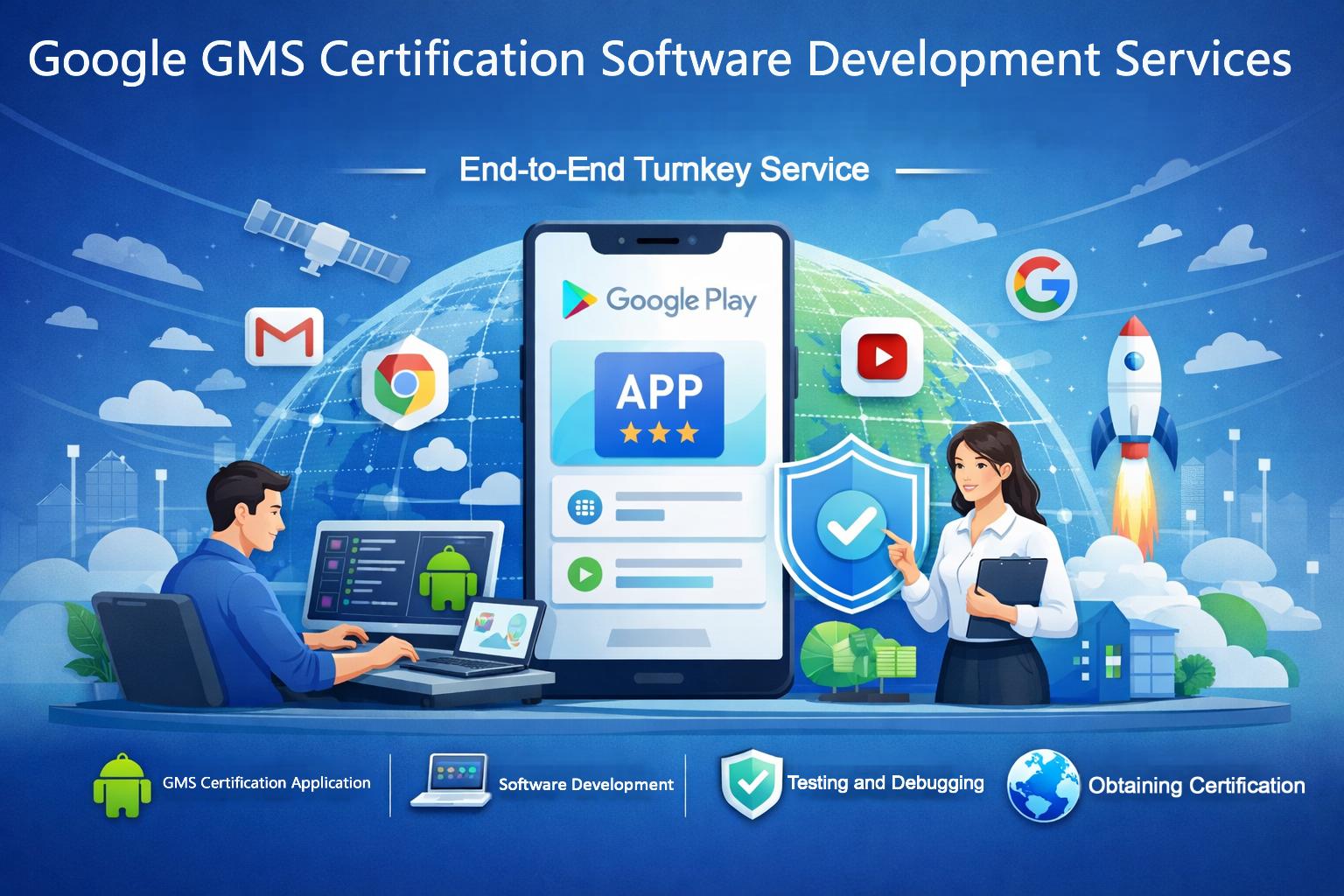
Google GMS Certification Software Development Services: Is GMS certification difficult? From testing to debugging, we offer a ‘one-stop, all-inclusive’ service
Android device manufacturers frequently encounter challenges during the Google GMS certification process, particularly regarding the complexity of bug fixes and delays in the certification cycle. As Android versions are updated, certification requirements become increasingly stringent.By offering a comprehensive, one-stop service covering everything from authorisation and testing to bug fixes and final certification.2026-07-23
-

Comprehensive services for Google GMS Keys/Google Keys and Widevine Keys, including application, flashing, splitting, testing, rewriting, and porting
Many enterprises frequently encounter the following issues during mass production, certification application, system upgrades or hardware modifications:
How to apply for Google Keys?
How to complete Widevine L1 certification?
How to securely flash keys onto devices?
Can keys be migrated after replacing the device mainboard?
How to split and import keys in batches for factory mass production?
How to verify whether keys are flashed successfully
Are GMS certification failures related to keys2026-06-13
-

Google Android Digital Car Key Testing and Certification Service
Google Android's Digital Car Key certification is based on the CCC (Car Connectivity Consortium) Digital Key global standard. As a core member of the CCC, Google recognizes this certification and supports product integration with Google Wallet. Additionally, there are specific requirements for in-vehicle systems when used with Google Android devices.2026-04-01
-

Google Works with Google Home/WWGH Certified Service
The “Works with Google Home” (WWGH) certification is an official device compatibility program launched by Google. It is designed to ensure that third-party smart hardware integrates seamlessly with the Google Home ecosystem and supports management via Google Assistant voice control and the Home app.2026-04-01