
Google GMS Certification and BCR Biometric Compatibility Security Testing Service
During the Google GMS certification process for Android devices, Google has established a set of strict Biometric Compatibility Requirements (BCR).
If a device supports biometric functions (such as fingerprint, iris, or facial recognition), it needs to undergo BCR security testing and certification.
This requirement ensures that users receive reliable protection on Android devices, and it is defined within Google's Android Compatibility Definition Document (CDD).
The Core of BCR
The core of BCR is to classify biometric sensors into three security levels, each with different technical requirements and application permissions.
This tiered structure aims to balance convenience and security, ensuring that both developers and users clearly understand the protection level provided by each type of biometric authentication.
After successfully passing Google's BCR testing, during the GMS certification application, Deeplight will assist clients in submitting a onestop “Android Biometric Compliance Report Device” form to Google for review.
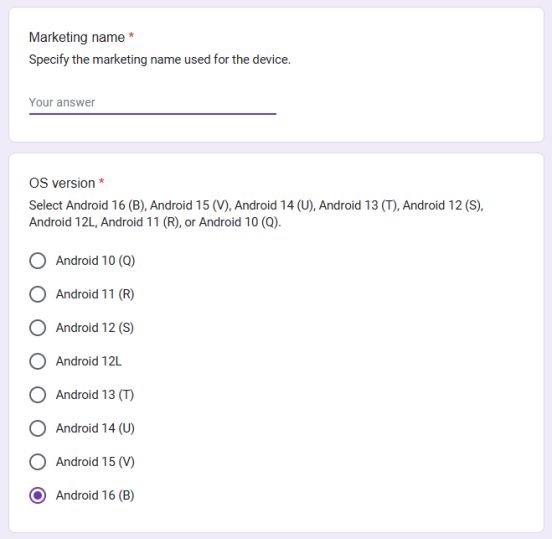
Example Screenshot of BCR Report Submission by Deeplight
Introduction to BCR Biometric Security Levels
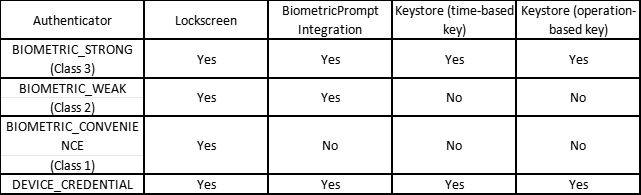
Android CDD Classification
-
Class 1 (formerly “Convenience”)
Security: Lowest level.
Technical Requirements: This category refers to biometric methods primarily designed for user convenience with limited security—such as 2D facial recognition based on a standard camera.
Application Scenarios: Class 1 biometrics may be used for device screen unlocking but cannot be integrated with the BiometricPrompt API, meaning apps cannot use these biometric methods for authentication or cryptographic key protection.
-
Class 2 (formerly “Weak”)
Security: Medium level.
Technical Requirements: These biometric methods typically require hardware support and must perform matching within an isolated execution environment (such as a Secure Area or TEE) to prevent data theft by malicious software.
Application Scenarios: Class 2 biometrics can be used for device unlocking and can integrate with the BiometricPrompt API for app authentication.
However, they cannot be used to bind or protect keys in the Android Keystore, making them unsuitable for highly sensitive cryptographic operations. -
Class 3 (formerly “Strong”)
Security: Highest level.
Technical Requirements: Class 3 certification represents the most secure biometric implementation within the Android ecosystem.
It requires processing within a secure isolated environment, extremely low error rates, and strong antispoofing capabilities.
To measure spoof resistance, Google uses performance metrics such as Spoof Acceptance Rate (SAR).
Application Scenarios: Class 3 biometrics can be used for device unlocking, app authentication, and—most importantly—for securing cryptographic keys in the Android Keystore, providing toplevel protection for payments and sensitive data storage.
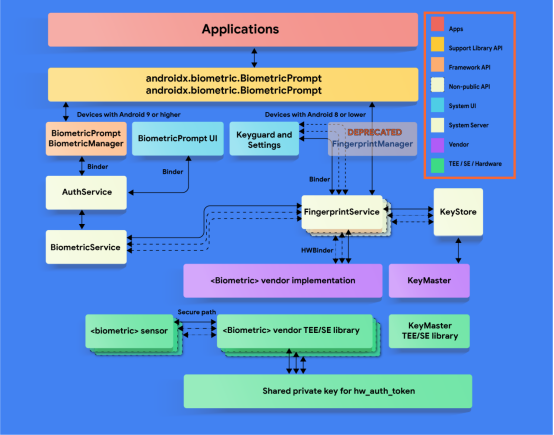
Google Android BiometricPrompt Architecture
To ensure compliance with these standards, every Android device equipped with biometric functionality must follow Google's biometric security program.
Device manufacturers and their biometric solution providers are required to submit a Biometric Compliance Report (BCR) to demonstrate that their products have passed rigorous security architecture and antispoofing tests.
Only after passing these tests and obtaining certification can a device be integrated into the Android biometric framework and classified as Class 1, 2, or 3, giving users a transparent and trustworthy level of security assurance.
Deeplight's BCR and Google Certification Services
Deeplight has been conducting Google ecosystemrelated testing and certification for many years.
We have assisted numerous clients—ranging from building security systems to mobile and tablet devices, as well as POS terminals—in completing Google GMS certification and submitting their Android Biometric Compatibility Reports (BCR).
Our onestop service covers the entire certification process for all Googlerelated testing.
We welcome inquiries about our BCR and Google certification services.
-
Notification on the Deadline for Google Widevine L1 DRM Certification Applications for Android 11 and 12
Due to Google Widevine‘s latest security and policy upgrades — aimed at ensuring the security and compliance of the digital rights management (DRM) ecosystem — Google has now officially terminated the acceptance of new Widevine L1 DRM certification applications for Android 11, Android 12, and all lower versions. The minimum currently acceptable version is Android 13.2026-08-07
-
Google GMS Certification Software Development Services: Is GMS certification difficult? From testing to debugging, we offer a ‘one-stop, all-inclusive’ service
Android device manufacturers frequently encounter challenges during the Google GMS certification process, particularly regarding the complexity of bug fixes and delays in the certification cycle. As Android versions are updated, certification requirements become increasingly stringent.By offering a comprehensive, one-stop service covering everything from authorisation and testing to bug fixes and final certification.2026-07-23
-

Comprehensive services for Google GMS Keys/Google Keys and Widevine Keys, including application, flashing, splitting, testing, rewriting, and porting
Many enterprises frequently encounter the following issues during mass production, certification application, system upgrades or hardware modifications:
How to apply for Google Keys?
How to complete Widevine L1 certification?
How to securely flash keys onto devices?
Can keys be migrated after replacing the device mainboard?
How to split and import keys in batches for factory mass production?
How to verify whether keys are flashed successfully
Are GMS certification failures related to keys2026-06-13
-

Google Android Digital Car Key Testing and Certification Service
Google Android's Digital Car Key certification is based on the CCC (Car Connectivity Consortium) Digital Key global standard. As a core member of the CCC, Google recognizes this certification and supports product integration with Google Wallet. Additionally, there are specific requirements for in-vehicle systems when used with Google Android devices.2026-04-01
-

Google Works with Google Home/WWGH Certified Service
The “Works with Google Home” (WWGH) certification is an official device compatibility program launched by Google. It is designed to ensure that third-party smart hardware integrates seamlessly with the Google Home ecosystem and supports management via Google Assistant voice control and the Home app.2026-04-01